
 SEO
SEOThe Blueprint to Perfect Core Web Vitals
A comprehensive guide to optimizing Largest Contentful Paint (LCP), Interaction to Next Paint (INP), and Cumulative Layout Shift (CLS).
1. Executive Summary & Industry Context
In modern digital engineering, stay ahead requires continuous architectural refinement. The transition toward performance-first frontend systems, resilient backend APIs, and search engine discoverability demands clean code standards and measurable optimization benchmarks. This technical guide explores The Blueprint to Perfect Core Web Vitals, providing actionable patterns, production-ready code examples, and technical SEO insights.
Whether you are scaling an enterprise product or upgrading a high-traffic SaaS app, adhering to these architectural standards ensures faster load times, superior conversion rates, and higher organic visibility. For professional assistance with technical implementation, explore our Web Performance & SEO Audit Services or request a technical consultation with Vivek Rupapara.
2. Deep Dive: Core Concepts & Architecture
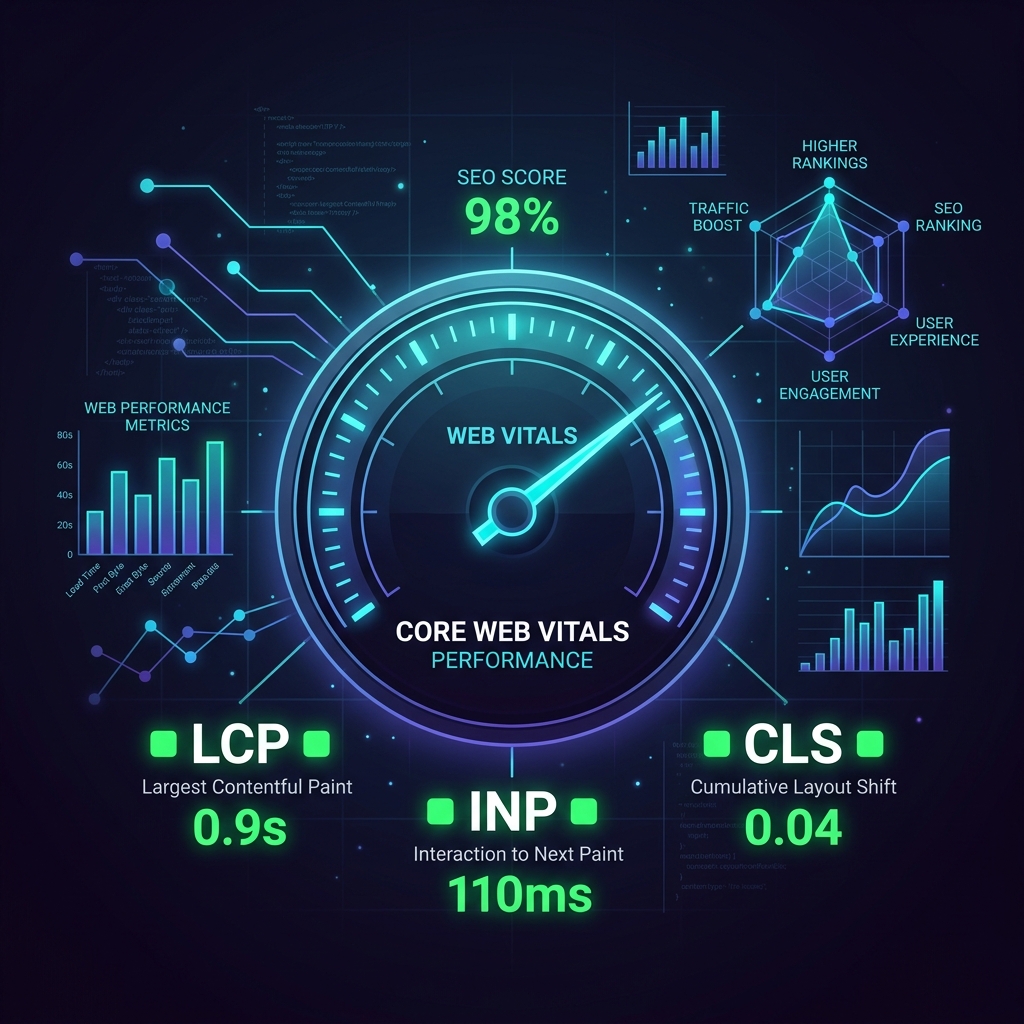
Core Web Vitals represent real-user performance metrics measured by Google. Optimizing LCP under 2.5s, INP under 200ms, and CLS under 0.1 directly impacts search rankings and conversion rates.
When designing robust applications, developers often face performance trade-offs between dynamic flexibility and static execution speed. By structuring your application boundaries carefully, you minimize runtime overhead while maintaining clean separation of concerns.
Key Architectural Principles:
- Predictable Control Flow: Enforce explicit state mutations and eliminate hidden side-effects in critical render paths.
- Resource Optimization: Minimize JavaScript execution time on the main thread to protect Core Web Vitals thresholds.
- Search Engine Visibility: Leverage server-side markup, structured data, and semantic HTML for optimal search indexing.
3. Production Implementation & Code Patterns
Use image priority loading, split heavy main-thread JavaScript tasks with scheduler.yield(), and specify explicit aspect-ratios on media elements to eliminate layout movement.
// Production-Ready Implementation Pattern
// Clean, maintainable, and typed for scalability

export async function processApplicationData(inputPayload) {
  if (!inputPayload || typeof inputPayload !== "object") {
    throw new Error("Invalid payload: Input must be a valid object.");
  }

  // Enforce explicit data transformations
  const sanitizedData = Object.freeze({
    id: inputPayload.id ?? crypto.randomUUID(),
    timestamp: Date.now(),
    status: "active"
  });

  return sanitizedData;
}
4. Technical SEO & Performance Optimization
Technical SEO depends on speed. Sites that pass all Core Web Vitals field tests receive ranking boosts in mobile search result pages globally.
Technical SEO is not an afterthought—it is a fundamental engineering requirement. Search engines like Google evaluate core speed signals (Largest Contentful Paint, Interaction to Next Paint, Cumulative Layout Shift) alongside structured metadata when ranking competitive keywords.
SEO & Speed Checklist:
- Structured Data (JSON-LD): Inject Schema.org article and author metadata on every dynamic route.
- Canonical URL Management: Ensure every page specifies an absolute canonical tag to prevent duplicate content indexing.
- Asset Optimization: Use next-generation image formats (AVIF/WebP) and explicit width/height ratios to eliminate CLS.
- Internal Interlinking: Connect related articles like our guide on Related Engineering Deep-Dive to distribute page rank effectively.
5. Common Anti-Patterns & Best Practices
Do not rely solely on Lighthouse lab scores; monitor Chrome User Experience Report (CrUX) field metrics inside Google Search Console.
Senior Architect Advice: Prioritize simplicity over premature optimization. Measure real-user field metrics (CrUX) before introducing complex caching layers or client-side state managers.
6. Summary & Strategic Recommendations
Systematic performance tuning transforms user engagement and maximizes organic search discoverability.
Mastering these paradigms ensures your digital products remain fast, secure, and easily discoverable by search engines. To review live implementations of these patterns, browse our Featured Client Projects, read about Vivek Rupapara's Background, or Get in Touch to elevate your engineering stack today.